The effect of COVID-19 on young adults
- Joel Gomez

- Jul 18, 2025
- 7 min read
Literature review & research by Joel Gomez
Abstract
With many young adults still in school, and some even entering college during a troubling period marked by uncertainty and global health crises, their education was not only at risk but also their overall well-being. This was a time when their lives were at risk, their education uncertain, and even graduation in question. The challenges faced by these students were unprecedented, leading to a cascade of dramatic changes that would have lasting effects on their academic and personal lives. Such a drastic time naturally resulted in drastic changes in youth mental health, as the pressures of navigating this new reality weighed heavily on their shoulders.
Introduction
Issues such as anxiety and depression, which were already on the rise prior to the pandemic, saw a significant escalation during this period. The fear and uncertainty surrounding COVID-19 only intensified these existing mental health issues, creating a perfect storm of stress and anxiety for young adults. Around 3.7 million young adults were starting college when the pandemic hit, facing not only the typical pressures of higher education but also the added burden of a global crisis. The transition to online learning, isolation from peers, and concerns about health and safety created an environment rife with challenges.
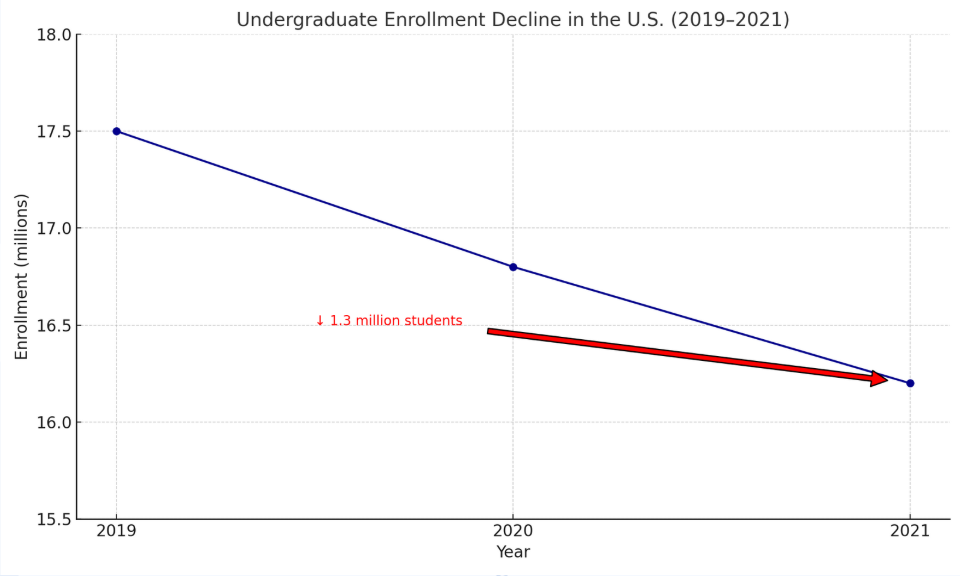
Undergraduate enrollment fell by 6.6% from 2019 to 2021, a decline that reflects the profound impact of the pandemic on educational trajectories. This sharp decrease equates to about 1.3 million students who ceased their undergraduate education altogether, leaving many to question their future and the viability of their academic pursuits. The implications of this decline are far-reaching, affecting not only the individuals involved but also the broader educational landscape and economy. Many students found themselves grappling with feelings of disconnection and uncertainty about their career paths, leading to a significant rise in mental health concerns among this demographic.
As institutions struggled to adapt to the new normal, students faced an array of challenges, including difficulties in accessing mental health resources, navigating remote learning environments, and maintaining motivation in the face of overwhelming uncertainty. The pandemic has underscored the importance of mental health support and the need for educational institutions to prioritize the well-being of their students. In response to these challenges, many colleges and universities have begun to implement more robust mental health services and support systems, recognizing that the emotional and psychological health of students is crucial for their academic success and overall quality of life.
In summary, the intersection of education and mental health during this unprecedented time has highlighted the vulnerability of young adults. As they navigate the complexities of their educational journeys amidst a global crisis, it is essential that we continue to address the mental health challenges they face, ensuring that they receive the support they need to thrive both academically and personally.
Evidence

The chart above shows how young adults from 18-25 saw a 4% rise in a depressive episode from 13% in 2017 to 17% in 2020 From April 2020–August 2022, 40% had anxiety and 33% had depression. significantly higher than older adults (31% anxiety, 24% depression). In February 2023, 50% of 18–24-year-olds reported symptoms of anxiety or depression—higher than any other age group.
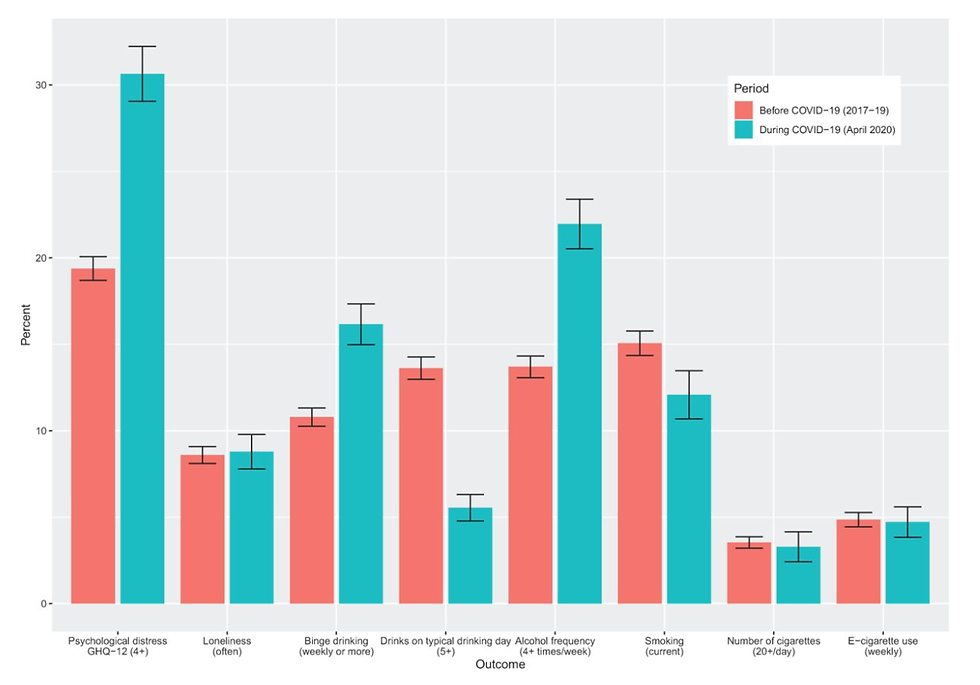
As shown by the chart above, psychological distress, loneliness, drinking, smoking, and other related issues were already increasing at a slow rate before COVID-19. However, during the pandemic, there was a dramatic spike in psychological distress, which contributed to a significant rise in frequent drinking, smoking, loneliness, and other related behaviors.
Summary of data (young adults 18-22)
Mental issue | Average rate in 2017 | Average rate between 2023 and 2024 | Difference between rates |
Depression | 4.13% | 6.88% | +2.75% |
Anxiety | 3.13% | 4.22% | +1.09+ |
PTSD | 3.4% | 7.5% | +4.1% |

The first chart presents data that reveals a stark rise in the prevalence of major depressive episodes among young adults during the pandemic. This increase can be attributed to various factors that have emerged as a direct consequence of the global health crisis. Young adults faced unprecedented levels of uncertainty, social isolation, and disruption in their daily lives. Many experienced significant changes in their educational environments, with a sudden shift to remote learning, which often lacked the engagement and support found in traditional classroom settings.
Additionally, the pandemic exacerbated feelings of anxiety and stress related to health concerns, economic instability, and the future job market. Many young adults found themselves grappling with the loss of internships, job opportunities, and the typical social interactions that are crucial for their emotional well-being. As a result, mental health professionals have reported an uptick in requests for counseling and mental health services among this demographic, indicating that the emotional toll of the pandemic is significant and ongoing.
The second chart highlights the corresponding decline in undergraduate enrollment rates, which has been notably pronounced during the pandemic. As the mental health of young adults deteriorated, many chose to postpone or abandon their higher education plans altogether. This decision may stem from a combination of factors, including financial constraints, the perceived value of remote learning, and the emotional toll of navigating a challenging academic landscape during such turbulent times. The decline in enrollment is particularly concerning as it may have long-term implications for the future workforce and the overall economy. With fewer young adults pursuing higher education, there is a risk of a skills gap emerging in various industries, which could hinder economic recovery efforts in the post-pandemic world.
The correlation between the rising rates of major depressive episodes and the decline in undergraduate enrollment rates is not merely coincidental; it reflects a complex interplay of mental health and educational engagement. As young adults struggle with their mental health, their ability to focus on academic pursuits diminishes, leading to lower retention rates and decreased enrollment in higher education institutions.
.

The graph presented illustrates a gradual but concerning rise in various behaviors that are commonly exhibited by individuals who are already dealing with existing mental health conditions. These behaviors include, but are not limited to, feelings of loneliness, increased substance abuse, and heightened psychological distress. It is important to note that all of these behaviors experienced significant spikes during the pandemic, a period marked by unprecedented levels of isolation and stress resulting from the global health crisis and its accompanying societal disruptions. The isolation brought about by lockdowns and the fear of the virus led many to grapple with intensified feelings of loneliness, exacerbating their mental health struggles.
In particular, the rates of psychological distress more than doubled during this tumultuous time, highlighting the severe impact that external stressors can have on individuals' mental well-being. Alongside this alarming increase in distress, there were notable surges in behaviors such as drinking and smoking. Many individuals turned to substances as a coping mechanism to manage their anxiety and the overwhelming uncertainty that characterized the pandemic. This reliance on substances not only reflects a temporary escape but also indicates a deeper, more pervasive issue regarding the mental health landscape during this era.
As the pandemic began to wane, it became evident that the effects on mental health were not merely transient. The levels of psychological distress and substance use continued to rise, indicating that the ramifications of the pandemic would linger long after the immediate crisis had subsided. The enduring nature of these challenges suggests that the pandemic has left a lasting imprint on the mental health of many individuals, necessitating ongoing attention and intervention. The data underscores the importance of addressing these issues through comprehensive mental health support systems, community engagement, and targeted initiatives aimed at mitigating the long-term effects of such widespread psychological trauma.
The graph serves as a stark reminder of the profound and lasting impact that the COVID-19 pandemic has had on mental health, particularly for those already vulnerable due to pre-existing conditions. It highlights the urgent need for continued research and resources to support mental health initiatives in a post-pandemic world, as the challenges faced by individuals are far from over.
Conclusion
COVID-19 had a significant impact on younger adults, leading to a rise in multiple mental disorders, decreased school attendance, and increased abuse of alcohol and other substances. The pandemic brought about unprecedented changes to daily life, including the abrupt transition to remote learning, social isolation due to lockdown measures, and heightened anxiety about health and uncertainty regarding the future. As a result, many young adults experienced a surge in mental health issues such as depression, anxiety disorders, and post-traumatic stress disorder (PTSD). The isolation from peers and the disruption of regular social interactions contributed to feelings of loneliness and despair, exacerbating existing mental health conditions and creating new ones.
Moreover, the educational landscape was dramatically altered, with many students struggling to adapt to online learning environments. The lack of in-person interaction with teachers and classmates not only hindered academic performance but also diminished motivation and engagement in educational activities. Reports indicated a notable decline in school attendance, with some students opting out of virtual classes altogether, leading to concerns about long-term educational setbacks and the widening of achievement gaps among different socioeconomic groups.
In addition to these challenges, the pandemic also saw a troubling increase in substance abuse among younger adults. Many turned to alcohol and drugs as coping mechanisms to deal with the stress, uncertainty, and emotional turmoil brought on by the pandemic. The accessibility of substances and the normalization of drinking during lockdowns contributed to this rise, with many young adults reporting increased consumption levels compared to pre-pandemic times. This trend raises serious concerns about the long-term implications for physical health, mental well-being, and social relationships.
Even today, we continue to see new evidence of how the fallout from the pandemic has truly affected millions of people. Mental health professionals are observing a sustained demand for mental health services as individuals grapple with the lingering effects of the crisis. Research studies are being conducted to better understand the long-term psychological impacts, and communities are working to implement support systems to address the needs of younger adults who are still struggling. The societal implications of these changes are profound, highlighting the need for a comprehensive approach to mental health care and educational support as we navigate the post-pandemic landscape.
As we move forward, it is crucial to prioritize the mental health and educational needs of younger adults. This includes enhancing access to mental health resources, including counseling and support groups, implementing flexible educational programs that cater to diverse learning styles and needs, encouraging open conversations about mental health and substance use to reduce stigma, fostering community engagement and social connections to combat isolation, and more. By addressing these areas, we can work towards a more resilient generation that is better equipped to handle future challenges, ultimately fostering a healthier society in the aftermath of the pandemic.
References
Niedzwiedz, C. L., Green, M. J., Benzeval, M., Campbell, D., Craig, P., Demou, E., Leyland, A., Pearce, A., Thomson, R., Whitley, E., & Katikireddi, S. V. (2021, March 1). Mental health and health behaviours before and during the initial phase of the COVID-19 lockdown: Longitudinal analyses of the UK household longitudinal study. Journal of Epidemiology & Community Health. https://jech.bmj.com/content/75/3/224
Age disparities in prevalence of anxiety and depression among US adults during the covid-19 pandemic | depressive disorders | jama network open | jama network. (n.d.). https://jamanetwork.com/journals/jamanetworkopen/fullarticle/2812389

Comments